call_end

    • Ar chevron_right

      Why Lockdown mode from Apple is one of the coolest security ideas ever

      news.movim.eu / ArsTechnica • 7 July 2022
    Why Lockdown mode from Apple is one of the coolest security ideas ever

    Enlarge (credit: Apple)

    Mercenary spyware is one of the hardest threats to combat. It targets an infinitesimally small percentage of the world, making it statistically unlikely for most of us to ever see. And yet, because it selects only the most influential individuals (think diplomats, political dissidents, and lawyers) sophisticated malware private companies sell to nation-state governments—many with documented human-rights abuses—has a devastating effect that’s far out of proportion to the small number of people infected.

    This puts device and software makers in a bind. How do you build something to protect what’s likely well below 1 percent of your user base against malware built by companies like NSO Group, maker of clickless exploits that instantly convert fully updated iOS and Android devices into sophisticated bugging devices.

    No security snake oil here

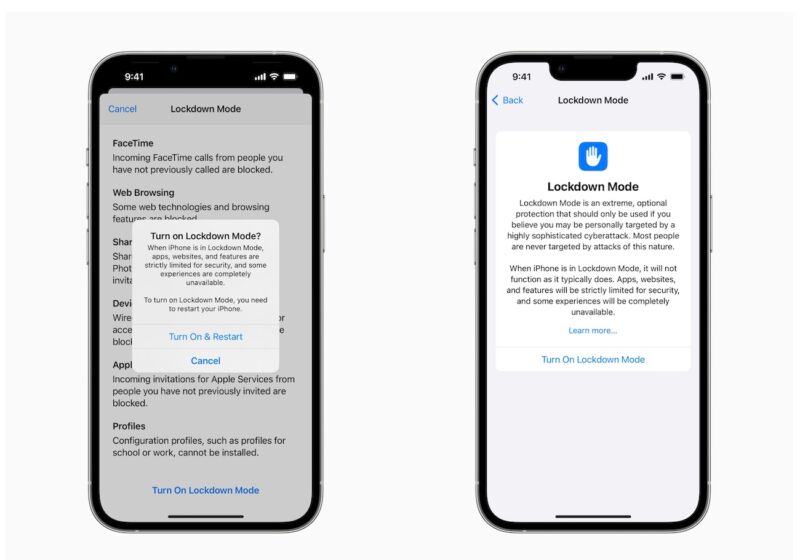
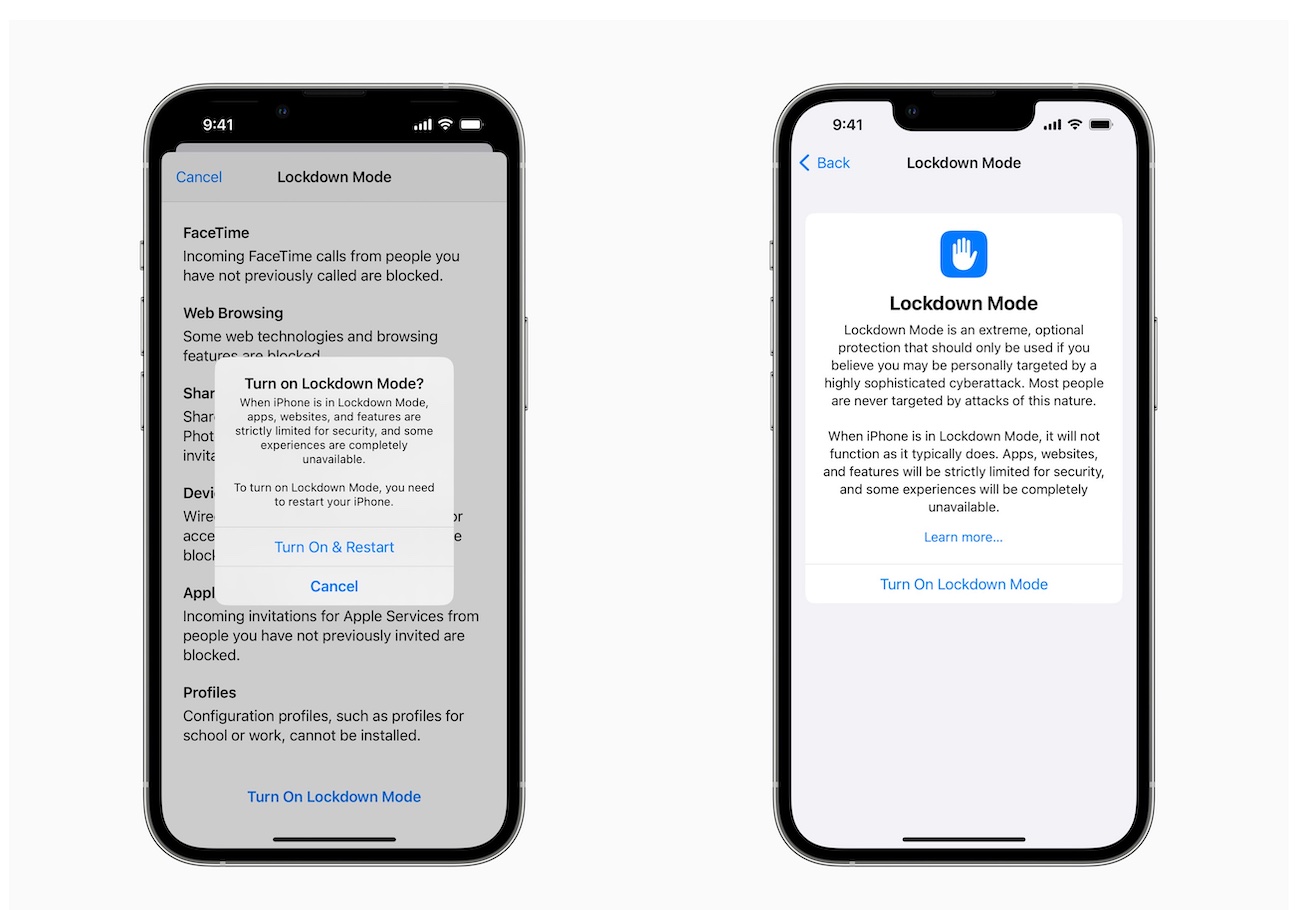
    On Wednesday, Apple previewed an ingenious option it plans to add to its flagship OSes in the coming months to counter the mercenary spyware menace. The company is upfront—almost in your face—that Lockdown mode is an option that will degrade the user experience and is intended for only a small number of users.

    Read 10 remaining paragraphs | Comments
    • Ar chevron_right

      Florida battling giant, savage snails that spread brain-invading worms—again

      news.movim.eu / ArsTechnica • 6 July 2022

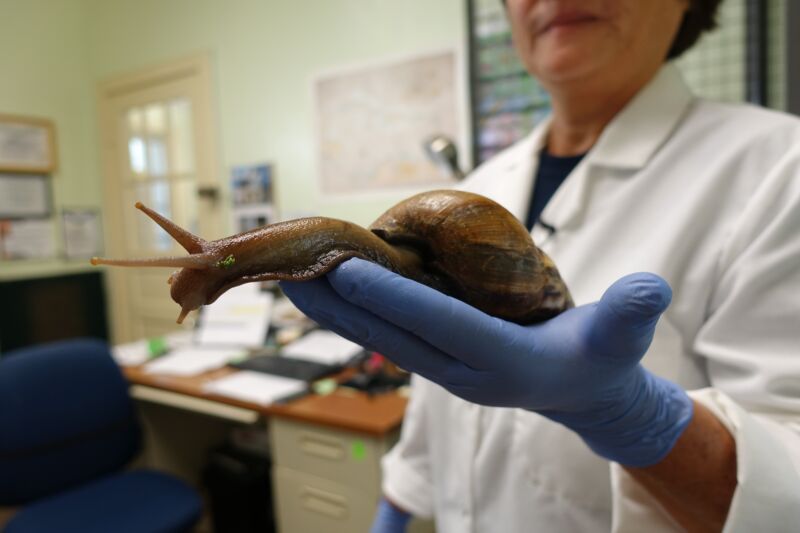
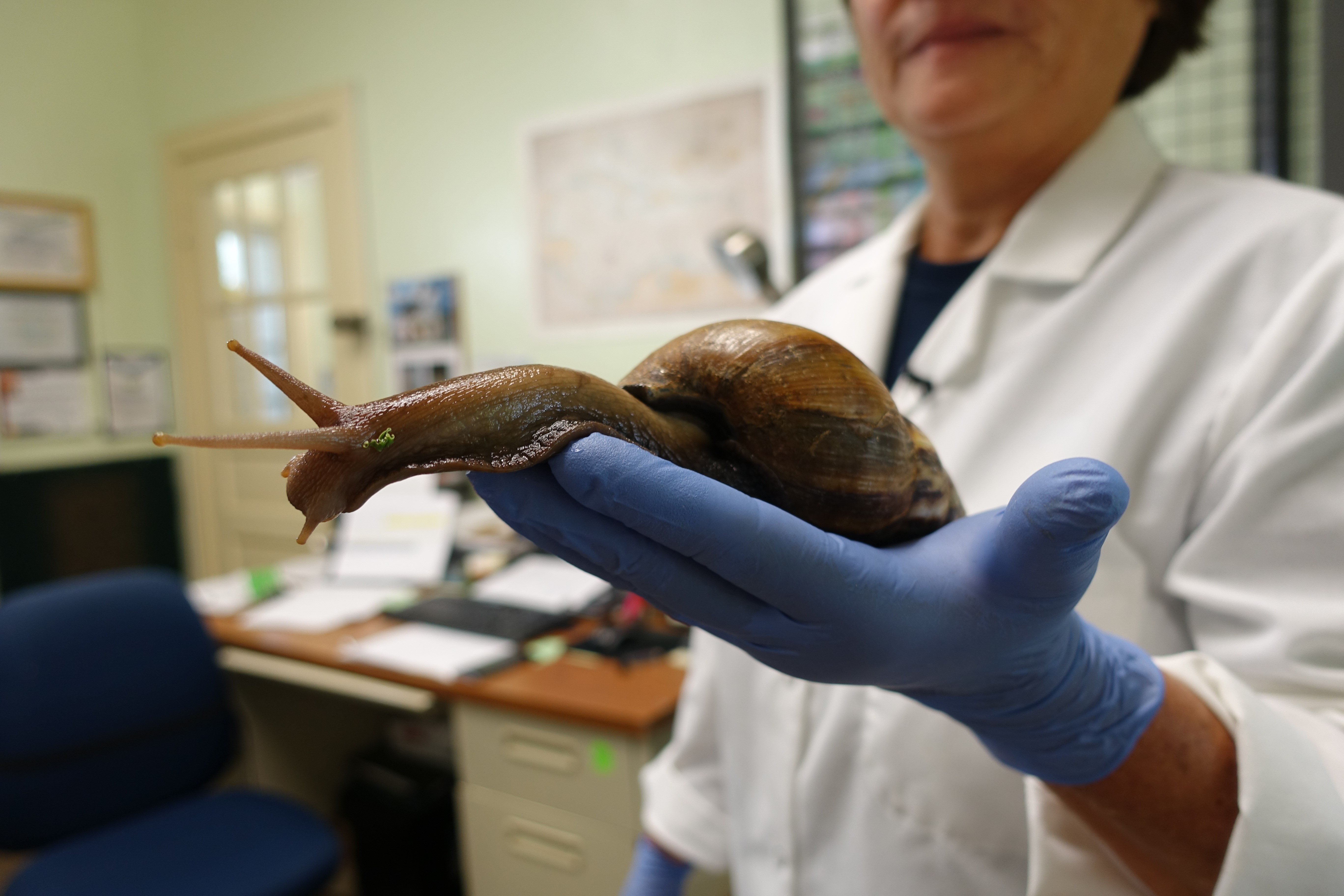
    Mary Yong Cong, a Florida Department of Agriculture scientist, holds a giant African snail in her Miami lab on July 17, 2015.

    Enlarge / Mary Yong Cong, a Florida Department of Agriculture scientist, holds a giant African snail in her Miami lab on July 17, 2015. (credit: Getty | Kerry Sheridan )

    Officials in Florida are again battling a highly invasive, extraordinarily destructive giant snail species that also happens to be capable of spreading parasitic worms that invade human brains.

    The giant African land snail (GALS)—aka Lissachatina fulica —can grow up to 20 centimeters (8 inches) long and is considered " one of the most invasive pests on the planet ," according to the Florida Department of Agriculture and Consumer Services. It ravenously feasts on over 500 plant species—including many valuable fruits, vegetables, and ornamentals—while prolifically spawning, pushing out several thousand eggs in its multiyear life span.

    In late June, Florida state officials confirmed the presence of GALS on a property in Pasco County, on the west-central coast of the state, just north of Tampa. They have since set up a quarantine zone around the property and began snail-killing pesticide treatments last week.

    Read 7 remaining paragraphs | Comments
    • Ar chevron_right

      Looking to the future, Virgin Galactic purchases 2 more motherships

      news.movim.eu / ArsTechnica • 6 July 2022

    Virgin Spaceship Unity and Virgin Mothership Eve take to the skies on their first captive carry flight on September 8, 2016.

    Enlarge / Virgin Spaceship Unity and Virgin Mothership Eve take to the skies on their first captive carry flight on September 8, 2016. (credit: Virgin Galactic)

    Nearly a full year has passed since Virgin Galactic last flew its SpaceShipTwo vehicle into space, but the company says it is progressing toward a more rapid cadence of flights.

    On Wednesday, Virgin Galactic announced a deal with Boeing-owned Aurora Flight Sciences to design and manufacture two next-generation motherships. A mothership carries the Virgin Galactic spaceship to an altitude of about 15 km before releasing it, after which the spaceship fires its rocket engine and flies above 90 km.

    In a news release , Virgin Galactic said it expects to take delivery of the first of the two new motherships in 2025. The company presently has a single carrier aircraft, VMS Eve , that made its first flight in 2008. Virgin has not said how long this vehicle will be able to fly missions, nor how much refurbishment it will need as it begins flying more frequently.

    Read 7 remaining paragraphs | Comments
    • Ar chevron_right

      Orders for Apple’s new M2 MacBook Air begin July 8

      news.movim.eu / ArsTechnica • 6 July 2022

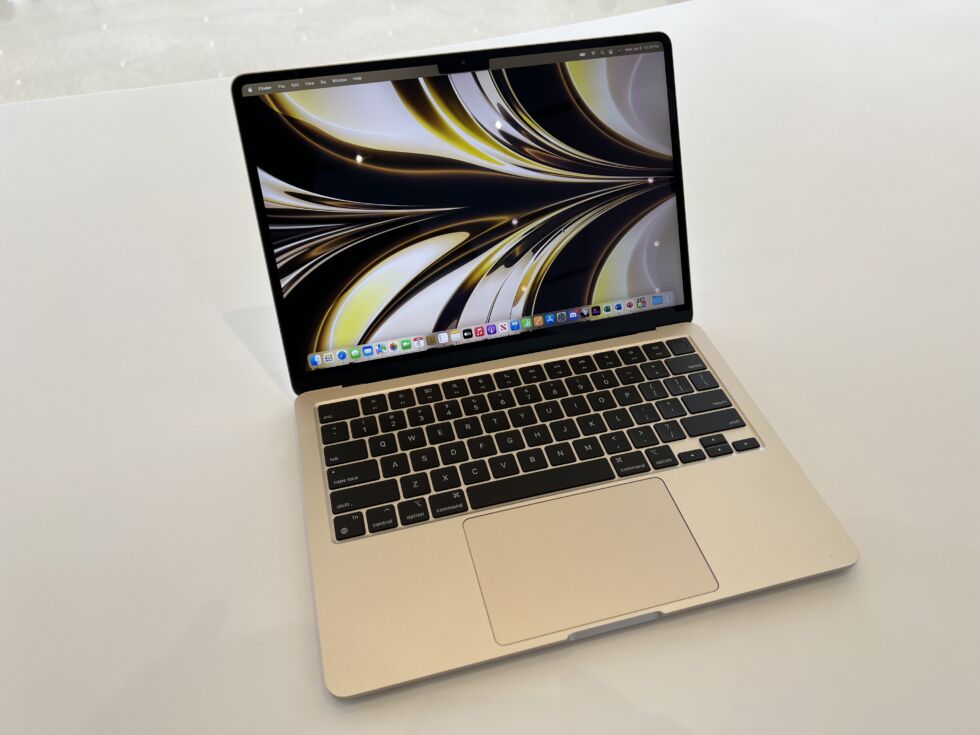
    According to a new blog post by the company, Apple will begin taking orders for its newly redesigned 13.6-inch MacBook Air this Friday, July 8, at 5am PDT. The laptop will arrive at buyers' doorsteps and become available for same-day retail purchase one week later on Friday, July 15.

    It will be the second Mac to launch with Apple's second-generation M2 system-on-a-chip, which follows 2020's M1 with substantially faster memory bandwidth and graphics and moderately improved CPU performance.

    It's the same chip as that found in the 2022 13-inch MacBook Pro, which we recently reviewed . We found that the M2 offered 10 to 15 percent improved CPU performance compared to the M1 and as much as 40 percent faster GPU performance with the 10-core GPU configuration. Unlike the 13-inch MacBook Pro, the MacBook Air defaults to an eight-core GPU configuration with an optional 10-core upgrade.

    Read 3 remaining paragraphs | Comments

    • Ar chevron_right

      Researchers seem to stumble across an electrolyte for a sodium battery

      news.movim.eu / ArsTechnica • 6 July 2022 • 1 minute

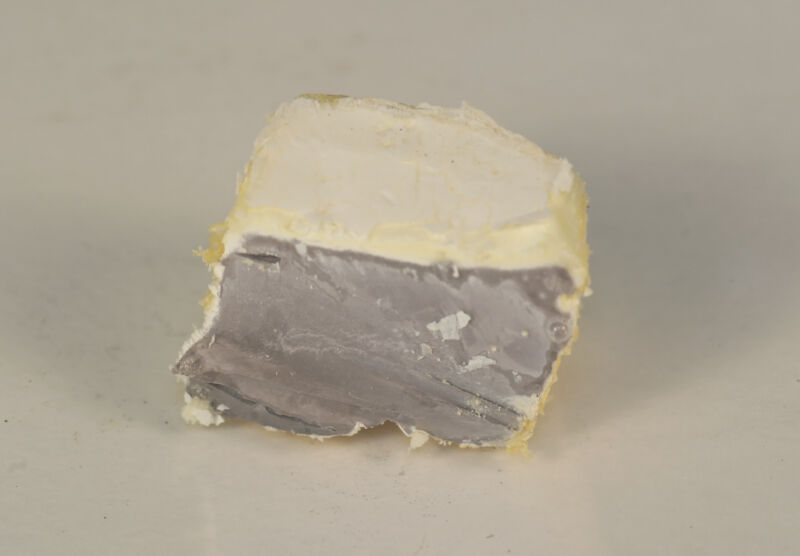
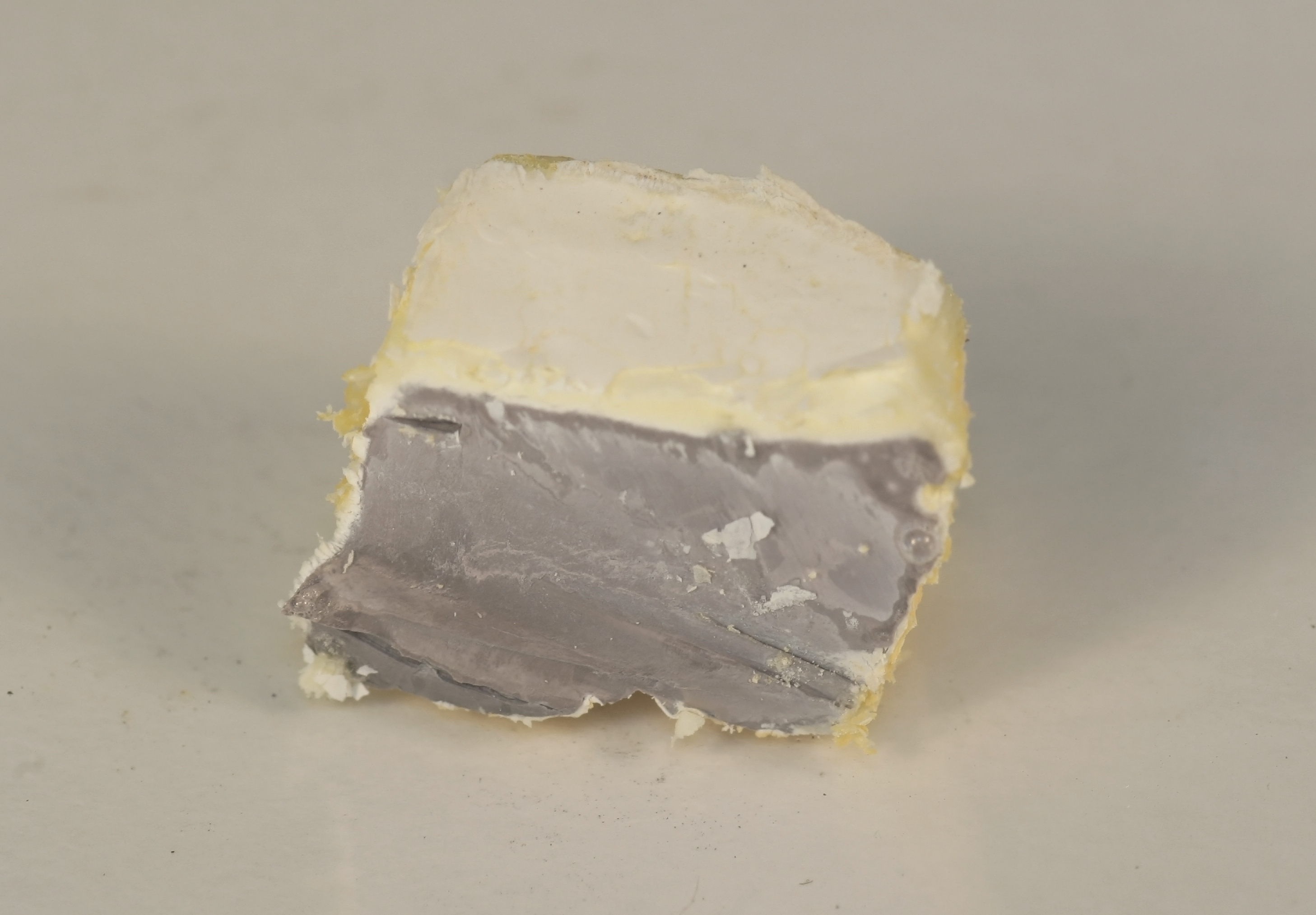
    Image of a chunk of metal surrounded by a whitish crust.

    Enlarge / Sodium metal will react with something in just about any environment it encounters on Earth. Here, a fresh cut shows how extensive its reactions with air are. (credit: Getty Images )

    Lithium-based batteries are great , with different electrode chemistries allowing them to be slotted into a variety of use cases. The problem with them has nothing to do with their performance. The challenge we face is that we want to make a lot of batteries; if all of them use lithium, we're undoubtedly going to face supply crunches.

    One potential solution to that is to simply replace the lithium with a different ion. Alternative batteries may not be as good as lithium variants in all the different places we currently use them. They just have to be good enough at one task to take away some of the need to stick lithium everywhere.

    That's the reasoning behind some interest in sodium-based batteries. Sodium is very plentiful and correspondingly cheap and can be made to behave a bit like lithium when used in a battery. But sodium batteries always carry risks associated with sodium's tendency to react explosively. But a recently developed solid electrolyte suggests that at least some of the challenges associated with sodium could be overcome.

    Read 12 remaining paragraphs | Comments
    • Ar chevron_right

      Microsoft’s xCloud game streaming looks worse on Linux than Windows

      news.movim.eu / ArsTechnica • 6 July 2022

    Microsoft's xCloud game streaming appears to dip to a lower visual quality setting when running on Linux. The apparent downgrade across operating systems was noted by a Reddit user over the holiday weekend and confirmed in Ars' own testing this morning.

    To compare how xCloud handles a Linux machine vs. a Windows machine, an Edge extension was used during testing to force the browser's User-Agent string to present itself as a Linux browser:

    • Windows User-Agent tested: Mozilla/5.0 (Windows NT 10.0; Win64; x64) AppleWebKit/537.36 (KHTML, like Gecko) Chrome/103.0.5060.66 Safari/537.36 Edg/103.0.1264.44
    • Linux User-Agent tested: Mozilla/5.0 (X11; Linux x86_64) AppleWebKit/537.36 (KHTML, like Gecko) Chrome/102.0.5005.27 Safari/537.36 Edg/102.0.1245.7

    Tests were conducted on the latest version of Microsoft Edge (Version 103.0.1264.44, 64-bit) running on a Windows 10 PC. All tests were run on a wired Internet connection registering download speeds of 120 Mbps and ~9 ms latency, according to spot tests at Fast.com .

    Read 6 remaining paragraphs | Comments

    • Ar chevron_right

      Excerpt: How the designers of GoldenEye 007 made use of “Anti-Game Design”

      news.movim.eu / ArsTechnica • 6 July 2022 • 1 minute

    In this excerpt from her upcoming book , writer and historian Alyse Knorr talks about some of the design decisions that made Goldeneye 007 stand out from other '90s first-person shooters, and why that design endures to this day. The book is currently looking for backers on Kickstarter .

    When [game designer David] Doak first joined the team at the end of 1995, GoldenEye ’s levels were just barebones architecture—no objectives, enemies, or plot. After designing the watch menu, he and [game designer Duncan] Botwood started creating a single-player campaign that followed and expanded upon GoldenEye the movie’s narrative—a difficult task, considering the fact that the film’s dialogue about Lienz Cossack traitors and Kyrgyz missile tests went over the heads of quite a few 12-year-olds. Doak and Botwood’s job was to tell this complicated story using rudimentary pre- and post-mission cutscenes, pre-mission briefing paperwork, in-game conversations with NPCs, and mission objectives, which proved the most powerful way to allow players to experience the story themselves.

    The biggest inspiration for GoldenEye ’s objective design was not another first-person shooter but rather Super Mario 64 . “I studiously tried to learn what Nintendo was,” [game designer Martin] Hollis said in 2015 of his years at Rare. “I played Link to the Past from beginning to end—I got all the hearts and all but two of the quarter hearts. I could write a thousand pages about that game. Then [an early version of] Mario 64 came out during the development of GoldenEye, and we were clearly influenced by that game. Ours was much more open as a result.” Hollis took from Super Mario 64 the idea of including multiple mission objectives within one level. For instance, in the Control level, the player must protect Natalya, disable the GoldenEye satellite, and destroy some armored mainframes.

    Read 58 remaining paragraphs | Comments

    • Ar chevron_right

      Federal patient privacy law doesn’t cover most period-tracking apps

      news.movim.eu / ArsTechnica • 6 July 2022

    Federal patient privacy law doesn’t cover most period-tracking apps

    Enlarge (credit: Aurich Lawson | Getty Images)

    ProPublica is a Pulitzer Prize-winning investigative newsroom. Sign up for The Big Story newsletter to receive stories like this one in your inbox .

    Following the Supreme Court’s decision overturning Roe v. Wade, advocates for privacy and reproductive health have expressed fears that data from period-tracking apps could be used to find people who’ve had abortions.

    They have a point. The Health Insurance Portability and Accountability Act, the federal patient privacy law known as HIPAA, does not apply to most apps that track menstrual cycles, just as it doesn’t apply to many health care apps and at-home test kits.

    Read 15 remaining paragraphs | Comments

    • Ar chevron_right

      Man set up fake ISP to scam low-income people seeking gov’t discounts, FCC says

      news.movim.eu / ArsTechnica • 6 July 2022

    A stack of $1 bills getting blown off a person's hand.

    Enlarge (credit: Getty Images | Jeffrey Coolidge)

    An Ohio man created a fake broadband provider in order to scam low-income consumers who thought they were getting government-funded discounts on Internet service and devices, according to the Federal Communications Commission. In a Notice of Apparent Liability for Forfeiture released Friday, the FCC proposed a fine of $220,210 against alleged scammer Kyle Traxler.

    Traxler created an entity called Cleo Communications that sought authorization to be a provider in the FCC's Emergency Broadband Benefit (EBB) program, which provided $50 monthly discounts on Internet service and discounts for devices. "Cleo apparently existed for the sole purpose of taking financial advantage of customers under the disguise of being a legitimate EBB Program provider," the FCC notice said. "Cleo Communications has had no business activity outside of the EBB Program and no other business purpose."

    The FCC began investigating after receiving complaints from consumers in at least eight states who ordered devices and/or "hotspot service." In some cases, consumers said that Cleo threatened to sue them after they asked for refunds for items and service they didn't receive.

    Read 16 remaining paragraphs | Comments